
COMPANION BIRDS · OWNER EDUCATION
Bumblefoot in Companion Birds
Bumblefoot, or pododermatitis, is inflammation and sometimes infection of the underside of a bird's foot. Pressure injuries can progress into deep tissue or bone infection.
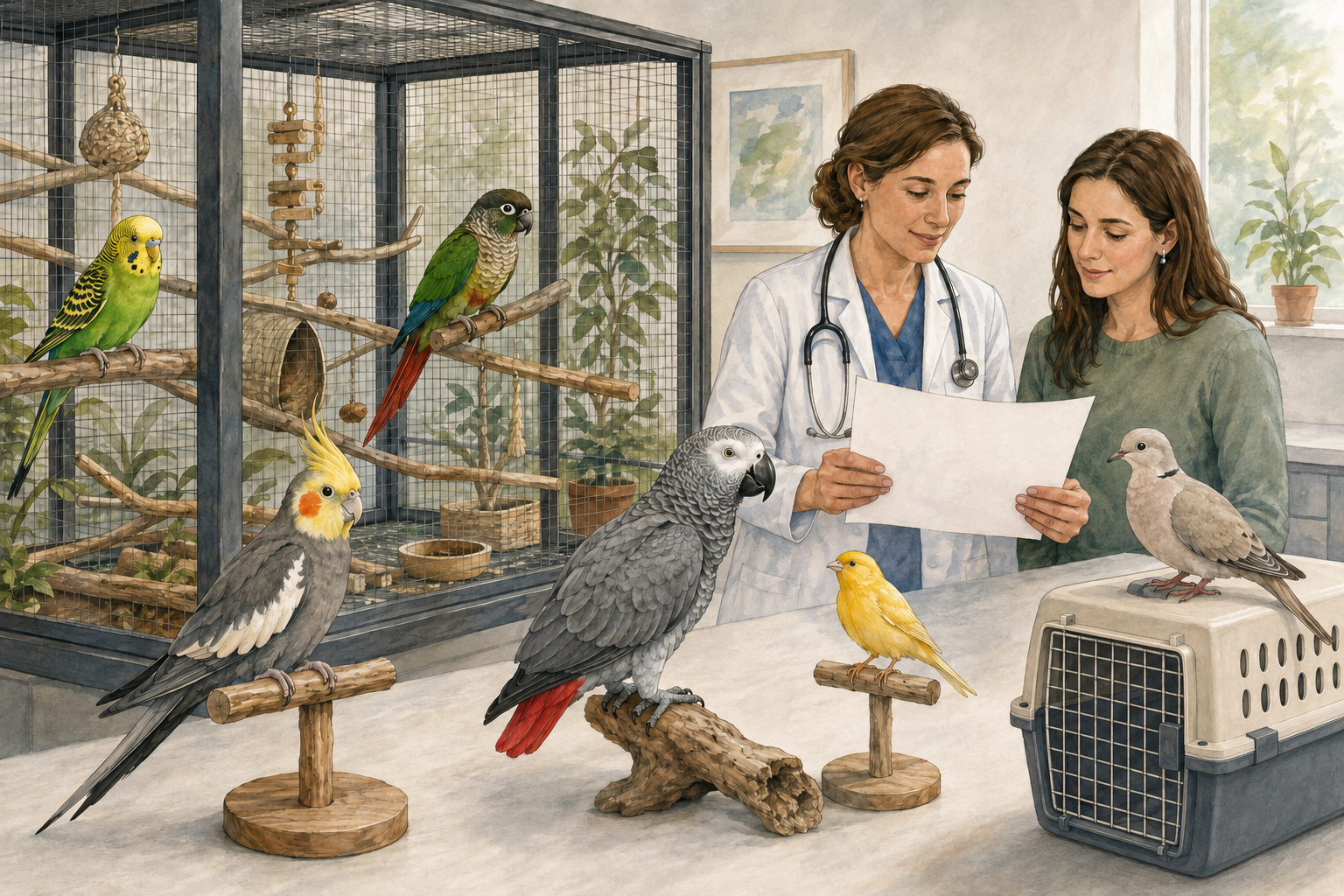
THE SHORT VERSION
What matters for your animal?
Start with the warning signs and when-to-contact sections if your animal is unwell. The same outward change can have several causes, so this guide helps you prepare questions rather than identify a diagnosis on your own.
What is this condition?
Bumblefoot, or pododermatitis, is inflammation and sometimes infection of the underside of a bird's foot. Pressure injuries can progress into deep tissue or bone infection.
Bumblefoot is a problem of the weight-bearing surface of the foot. Pressure injury, perch design, body condition, and infection can interact, so treatment is not limited to putting medicine on a sore. The depth of injury and ability to bear weight matter. Perch changes and protection need to distribute pressure appropriately; an improvised tight bandage can create additional harm.
Which species does this guide cover?
The species listed above are the focus of this guide, rather than a complete list of every animal that can develop this condition. Causes, testing and treatment may differ between species and individual patients.
Why can it happen?
- Unsuitable perches, limited movement, obesity, poor hygiene and nutritional problems can damage the skin.
What might an owner notice?
- Red or swollen soles, crusting, a dark scab, limping or reduced willingness to perch.
How is the problem investigated?
Examination assesses severity; imaging and culture may be needed for deep or recurrent disease.
Similar-looking skin changes can arise from parasites, infection, allergy, injury, or another underlying problem. Sampling the affected area can help separate those possibilities. Depending on the lesion, the veterinarian may examine cells, take scrapings, culture organisms, or obtain tissue for a pathologist. The purpose is to identify what is driving the damage, not just describe the redness or hair loss. Previous creams, cleaners, and medications are worth reporting because they can change the appearance and sometimes the usefulness of samples.
What might treatment involve?
Care combines pressure relief, prescribed wound care and pain management. Infection or dead tissue may need medication or surgery.
Damaged skin or other protective surfaces can become painful and vulnerable to contamination. Treatment considers the depth of injury, affected tissue, infection, and any reason healing may be impaired. Surface cleaning alone may not address deeper damage. The veterinarian may need to remove unhealthy material, provide pain control, protect the site, or investigate an underlying disease. Report new odor, discharge, swelling, darkening, or reduced use of the affected area, and follow the prescribed dressing or protection instructions exactly.
Antibiotic selection depends on the suspected or confirmed bacteria, the site of infection, and the animal's safety needs. A culture identifies organisms that grow from a sample; susceptibility testing helps assess which medicines may work against them. The laboratory result is considered alongside tissue penetration, dosing feasibility, and the clinical response. Antibiotics do not treat viruses, and adding one without a clear reason can obscure the investigation or cause adverse effects. Follow the current prescription rather than using leftovers from a previous illness.
This is an overview, not a prescription or a recommendation for a specific individual animal.
What can owners do at home?
Provide varied suitable perches and clean surfaces; follow bandage instructions and check circulation.
Comfort is assessed through behavior and function as well as obvious crying or vocalization. Changes in posture, movement, grooming, sleep, social interaction, or willingness to be handled can be useful clues. Compare the animal with its own normal behavior rather than with another animal. Keep a short record of what it can do comfortably and share changes with the care team. If pain control appears inadequate, contact the veterinarian; increasing a dose or combining medicines without advice can introduce serious risks.
Avoid actions that could make care less safe.
- Do not cut out a scab, use tight homemade bandages or assume all foot swelling is an abscess.
What can the longer-term outlook involve?
Early cases often improve; deep infection can require prolonged care and may impair function.
A recheck is not simply a repeat of the first appointment. It assesses whether the original problem is improving, whether complications are appearing, and whether the treatment remains appropriate. The useful measures may include comfort, function, intake, body weight, examination findings, or selected tests. Ask which changes are expected before the visit and which should trigger an earlier call. Improvement in one sign does not always mean that every part of the disease has resolved.
Can risk be reduced?
Suitable perches, healthy weight, activity and balanced nutrition support foot health.
When should you arrange care?
- Foot sores or limping need assessment; marked swelling, spreading redness or poor intake needs prompt care.
Seek urgent veterinary advice if you notice:
DO NOT DELAY URGENT CARE- Seek urgent care for marked foot swelling with declining intake or severe weakness.
What information helps the care team?
Record actual food intake, weight changes, droppings, enclosure conditions and recent introductions. A photograph of the enclosure and the exact diet and supplement labels can help reveal factors that are difficult to see during the appointment.
How should you understand the tests?
Ask what each proposed test is intended to answer. Some tests identify a cause; others assess severity, organ function or treatment safety. Results are interpreted with the examination and history. A normal result does not exclude every problem, and an abnormal result does not always explain every sign.
Questions to ask before leaving
- What is confirmed, and which other explanations are still being considered?
- What changes should we expect with the proposed plan, and when should we reassess if they do not occur?
- Which observations should I record, and which changes mean I should call sooner?
- What medicine or home-care problems should I report, and what are the instructions for a missed dose or suspected side effect?
- When is the recheck, what will it assess, and whom should I contact after hours?
A care plan may be adjusted as results or the response become clearer. Keep the written instructions and tell the team if cost, handling or administration difficulty makes the plan hard to follow.
Sources behind this guide
Bumblefoot in Avian Species | VCA Animal HospitalsVeterinary, university or animal-health guidance ↗Content last reviewed: October 3, 2026. Review status: veterinary-informed; independent veterinarian review not yet completed.