
ORNAMENTAL FISH · AQUARIUMS · PONDS
Aquatic Animals
Learn how water quality, filtration, species compatibility, quarantine and feeding affect the health of aquarium and pond animals.
Browse 19 species-specific guides ↓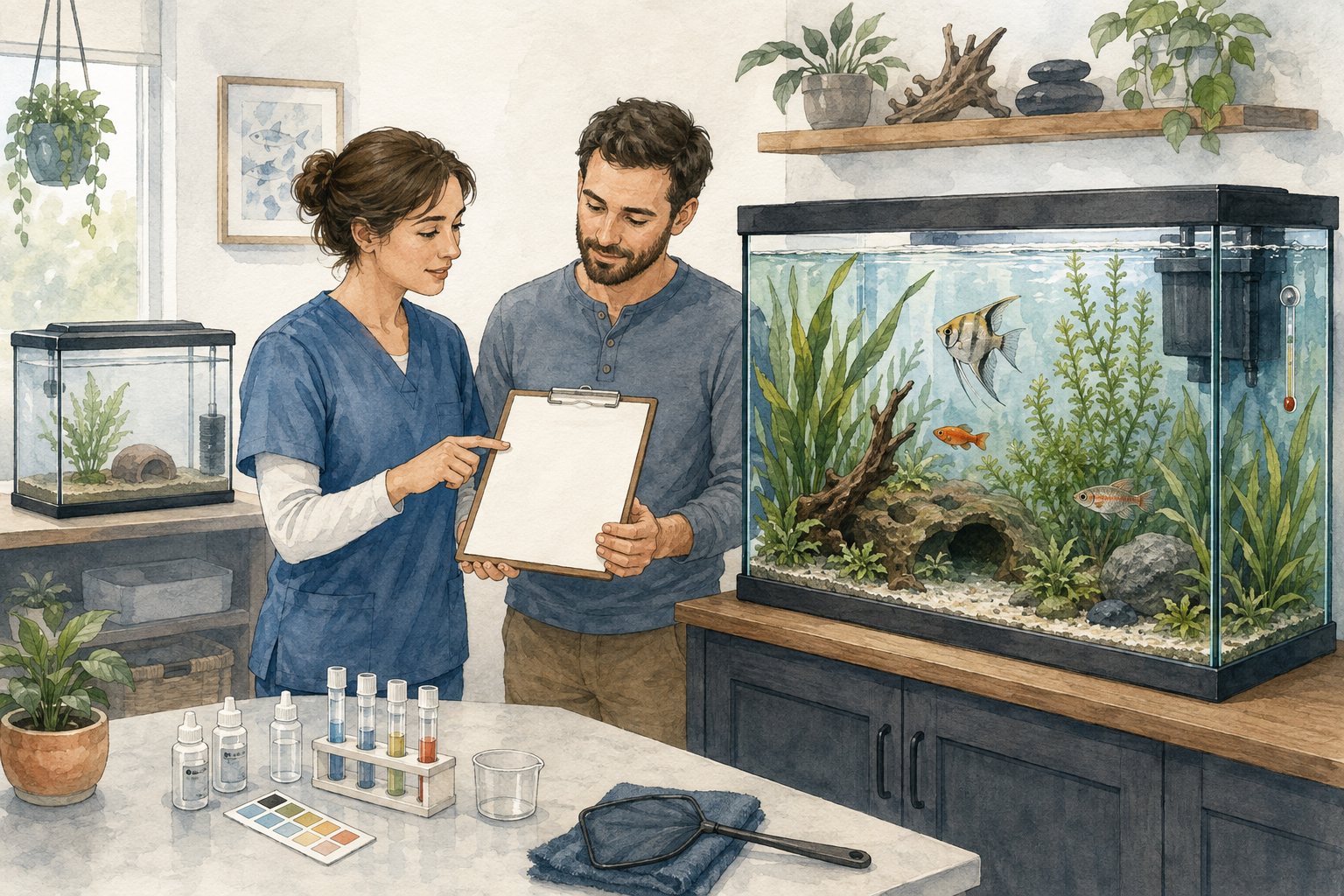
START WITH THE ESSENTIALS
Useful first steps for aquatic animals.
BROWSE THE FULL COLLECTION
Aquatic Animals health guides
Choose the topic that matches your question, then bring species-specific concerns to a veterinarian familiar with your animal.
Wellness & Prevention
Symptoms & Diseases
Koi Herpesvirus DiseaseKoi herpesvirus disease is a serious viral infection primarily affecting koi and common carp. Survivors may remain infected and later spread the virus.Read article →Spring Viremia of CarpSpring viremia of carp is a contagious viral disease affecting carp and some other freshwater fish. It is an important aquatic animal-health concern requiring professional containment.Read article →Lymphocystis in FishLymphocystis is a viral disease that enlarges cells in fish skin and fins, producing wart-like growths. It is often less immediately dangerous than diseases causing rapid deaths, but appearance alone is not diagnostic.Read article →Monogenean Flukes in FishMonogenean flukes are flatworm parasites that attach to fish skin or gills. They can reproduce quickly in confined systems and damage breathing surfaces.Read article →Anchor Worms in FishAnchor worms are parasitic crustaceans, not true worms. Adult females may appear as thread-like structures attached to skin, while other life stages remain in the water.Read article →Gas Bubble Disease in FishGas bubble disease occurs when excess dissolved gas forms bubbles in fish tissues. It is an environmental problem rather than a contagious infection, and some bubbles are not easily visible.Read article →Water-Quality–Related Illness in FishAmmonia, nitrite, oxygen, temperature and pH problems commonly cause illness that can affect many fish at once.Read article →Ich (White Spot Disease) in FishIch is a contagious parasite that may cause white spots, flashing and breathing problems, but not every white mark is ich.Read article →Fin Erosion and Fin Rot in FishFrayed fins can result from injury, aggression, poor water quality or infection and should not be diagnosed from appearance alone.Read article →Buoyancy Disorders in FishFloating, sinking or swimming abnormally is a sign with many possible causes—not automatically a swim-bladder infection.Read article →Velvet Disease in FishVelvet is a parasitic skin and gill disease that may look like fine gold or rust-colored dust and can spread rapidly.Read article →Dropsy and Body Swelling in FishDropsy describes fluid buildup and raised scales; it is a sign of serious internal dysfunction rather than one specific disease.Read article →Columnaris Disease in FishColumnaris is a bacterial disease that can damage skin, mouth and gills and may progress quickly in warm, stressed systems.Read article →
Procedures & Therapies
Aquatic treatment and quarantinePlanning treatment around the animal, the water system, and safe separation of new or sick aquatic animals.Read article →Humane euthanasia and end-of-life careMaking comfort-focused decisions, preparing for a professional euthanasia appointment, and arranging species-appropriate aftercare.Read article →Therapeutic nutrition across speciesUsing food as part of a medical plan while respecting species, life stage, disease, and the limits of diet labels.Read article →
Care recommendations are never one-species-fits-all.
This library provides educational information—not diagnosis, prescriptions or emergency triage. Husbandry, age, individual health, local conditions and medical history all influence the right plan. Contact a veterinarian familiar with the species whenever an animal seems ill or a question feels urgent.
Review emergency warning signs →