
PARROTS · FINCHES · CANARIES · DOVES
Companion Birds
Understand companion-bird nutrition, flight, housing, behavior, species differences and the subtle signs that can precede serious illness.
Browse 27 species-specific guides ↓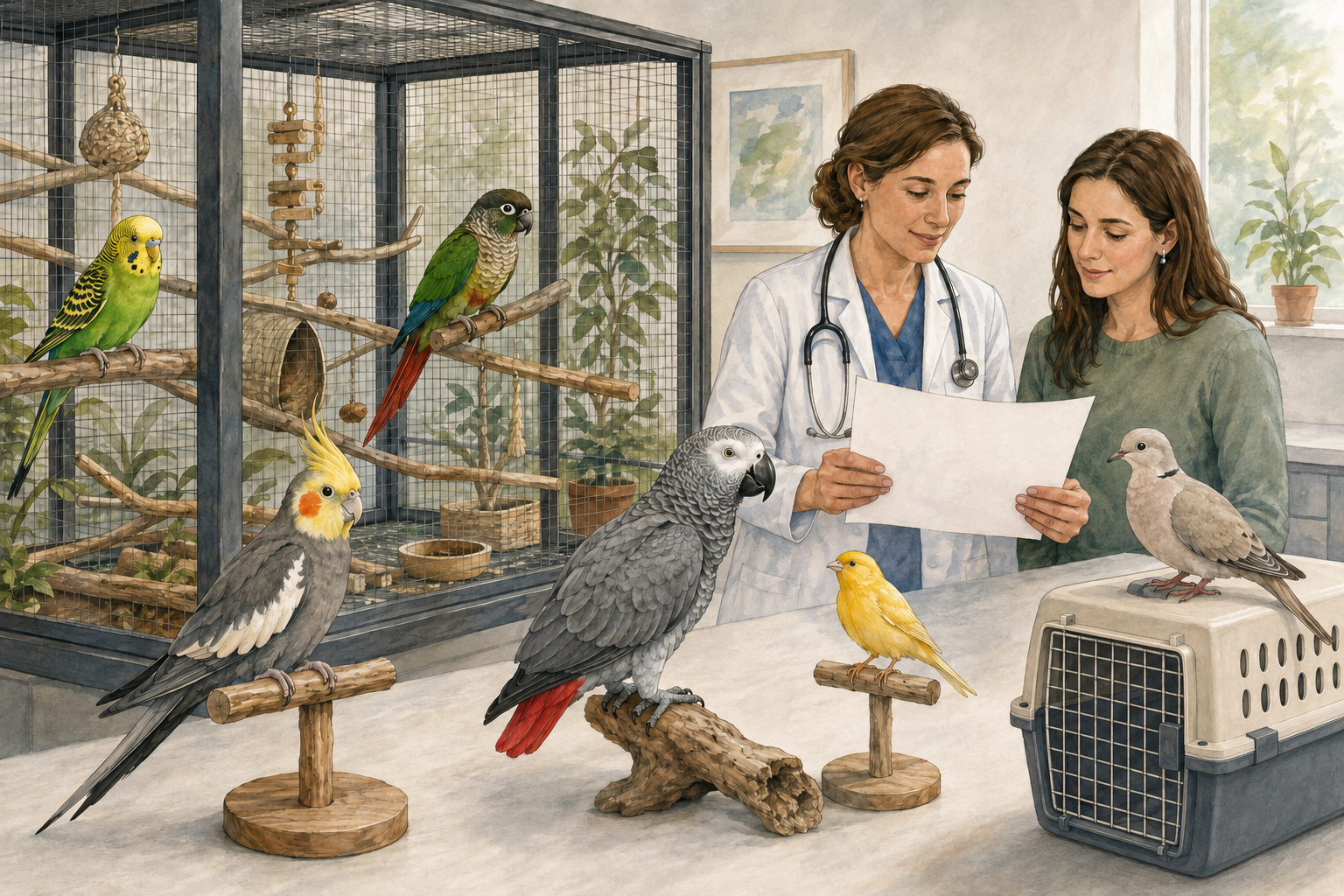
START WITH THE ESSENTIALS
Useful first steps for companion birds.
BROWSE THE FULL COLLECTION
Companion Birds health guides
Choose the topic that matches your question, then bring species-specific concerns to a veterinarian familiar with your animal.
Wellness & Prevention
Nutrition
Feeding Companion BirdsSpecies diets, conversion, weight & safetyRead article →Companion Bird WellnessSpecies, nutrition, housing & warning signsRead article →Budgies & CockatielsFlight, nutrition, reproduction & illnessRead article →African Greys & AmazonsLifelong cognition, nutrition & medicineRead article →
Symptoms & Diseases
Psittacine Beak and Feather Disease (PBFD)Psittacine beak and feather disease, or PBFD, is a viral disease that affects feather growth and can suppress immunity in parrots. It is different from ordinary molting or behavioral feather damage.Read article →Polyomavirus Infection in Companion BirdsAvian polyomavirus can cause severe illness and sudden death, particularly in young parrots. Adult birds may carry infection with few outward signs.Read article →Proventricular Dilatation Disease (PDD) in BirdsProventricular dilatation disease, or PDD, damages nerves controlling digestion and sometimes other body systems. It is associated with avian bornavirus, but infection and clinical disease are not the same thing.Read article →Gout in Companion BirdsGout is buildup of urate crystals in joints or internal tissues. Birds normally eliminate nitrogen waste as uric acid, so kidney dysfunction or dehydration can cause serious problems.Read article →Candidiasis in Companion BirdsCandidiasis is overgrowth of Candida yeast, usually affecting the mouth, crop or digestive tract of a bird. Yeast detection alone does not always prove clinically important disease.Read article →Bumblefoot in Companion BirdsBumblefoot, or pododermatitis, is inflammation and sometimes infection of the underside of a bird's foot. Pressure injuries can progress into deep tissue or bone infection.Read article →Cloacal Prolapse in Companion BirdsA cloacal prolapse is tissue protruding from the shared opening used for droppings and reproduction. The exposed tissue can dry, become injured or lose its blood supply.Read article →Vitamin A Deficiency in Companion BirdsVitamin A deficiency damages protective lining tissues in a bird's mouth, respiratory tract and other organs. It can make infection more likely and is often associated with an unbalanced diet.Read article →Respiratory Disease in Companion BirdsTail bobbing, voice change, nasal discharge or breathing effort can worsen quickly because birds often hide illness.Read article →Egg Binding and Reproductive Emergencies in BirdsA female bird can develop egg-related disease even without a male; straining and cage-floor sitting require urgent attention.Read article →Feather-Destructive Behavior in BirdsFeather chewing or plucking may involve medical disease, pain, environment, nutrition and behavior; it is not simply boredom.Read article →Psittacosis in Companion BirdsChlamydia psittaci can cause variable illness in birds and can infect people, making veterinary diagnosis and hygiene important.Read article →Fatty Liver Disease in Companion BirdsExcess fat accumulation in the liver can impair function and clotting and is often linked with obesity, unbalanced diets or metabolic disease.Read article →Heavy Metal Poisoning in BirdsLead or zinc exposure from household objects, cages, toys or hardware can cause digestive, neurologic and blood-related illness.Read article →Aspergillosis in BirdsAspergillus fungi can infect the airways and air sacs, especially when birds are stressed, immunocompromised or exposed to heavy mold contamination.Read article →
Procedures & Therapies
Avian procedures and hospital careHow avian teams plan stabilization, anesthesia, procedures, and home recovery for companion birds and poultry.Read article →Humane euthanasia and end-of-life careMaking comfort-focused decisions, preparing for a professional euthanasia appointment, and arranging species-appropriate aftercare.Read article →Therapeutic nutrition across speciesUsing food as part of a medical plan while respecting species, life stage, disease, and the limits of diet labels.Read article →
Care recommendations are never one-species-fits-all.
This library provides educational information—not diagnosis, prescriptions or emergency triage. Husbandry, age, individual health, local conditions and medical history all influence the right plan. Contact a veterinarian familiar with the species whenever an animal seems ill or a question feels urgent.
Review emergency warning signs →