
GUINEA PIGS · FERRETS · HEDGEHOGS · RODENTS · GLIDERS
Small Mammals
Find species-specific guidance for guinea pigs, ferrets, hedgehogs, hamsters, gerbils and sugar gliders—because small mammals do not share one care plan.
Browse 43 species-specific guides ↓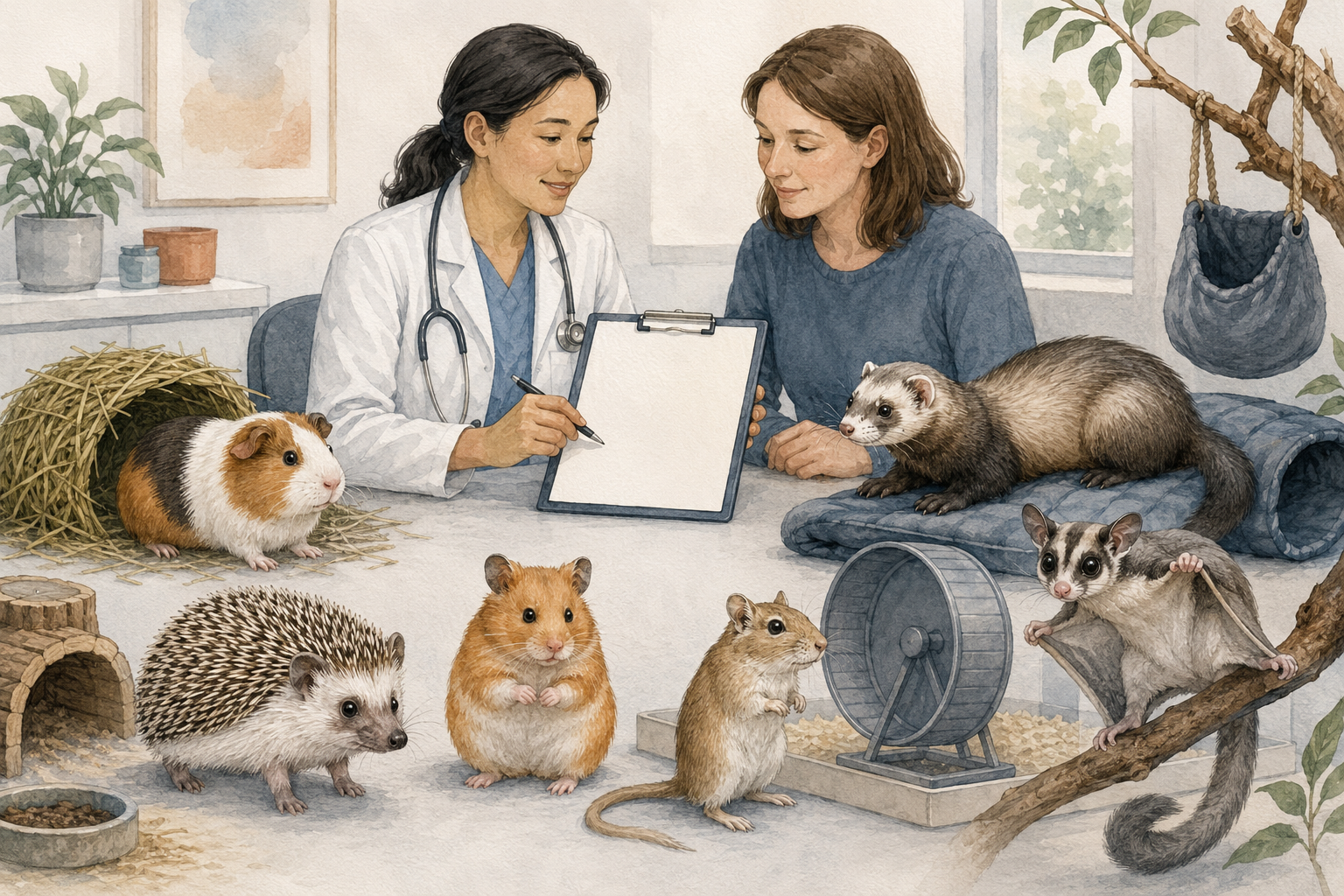
START WITH THE ESSENTIALS
Useful first steps for small mammals.
BROWSE THE FULL COLLECTION
Small Mammals health guides
Choose the topic that matches your question, then bring species-specific concerns to a veterinarian familiar with your animal.
Wellness & Prevention
Nutrition
Feeding Guinea PigsHay, pellets, vegetables & vitamin CRead article →Feeding HamstersComplete foods, caching, weight & warning signsRead article →Feeding GerbilsBalanced staples, foraging & social accessRead article →Feeding HedgehogsMeasured diets, insects, weight & illnessRead article →Feeding Sugar GlidersBalanced plans, calcium & group monitoringRead article →
Symptoms & Diseases
Appetite Loss in Small MammalsRabbits, guinea pigs, ferrets & hedgehogsRead article →Ovarian Cysts in Guinea PigsOvarian cysts are fluid-filled structures associated with the ovaries of female guinea pigs. Some produce hormonal changes; others cause problems through their size or pressure on nearby organs.Read article →Ringworm in Guinea PigsRingworm is a fungal infection of skin and hair, not a worm. Guinea pigs can carry it, and infection can spread to people and other animals.Read article →Dental Disease in ChinchillasChinchilla dental disease can involve both the visible incisors and the cheek teeth. Abnormal growth or tooth-root changes can cause pain, impaired eating and complications around the eyes.Read article →Gastrointestinal Stasis in ChinchillasGastrointestinal stasis means that normal movement through a chinchilla's digestive tract has slowed. It is usually a consequence of another problem, such as pain or inadequate intake, rather than a complete diagnosis.Read article →Mammary Tumors in RatsMammary tumors are common lumps in pet rats. Many are benign growths, but even a benign mass can become large, interfere with movement or ulcerate; not every lump is a mammary tumor.Read article →Respiratory Disease in RatsRespiratory disease in rats often involves several interacting infections and environmental factors. It can become chronic; occasional noise should not automatically be treated as harmless.Read article →Demodicosis in HamstersDemodicosis is excessive proliferation of microscopic Demodex mites in hamster skin. Some mites may be present without illness; widespread disease can reflect an underlying health problem.Read article →Seizures in GerbilsSome gerbils have inherited susceptibility to seizures, often triggered by stress or handling. A seizure-like episode can also have another cause, so new events deserve assessment.Read article →Dental Disease in Guinea PigsGuinea-pig teeth grow continuously, and dental disease can make chewing painful long before owners see an obvious tooth problem.Read article →Vitamin C Deficiency in Guinea PigsGuinea pigs cannot make vitamin C; deficiency can affect joints, gums, healing and overall strength.Read article →Insulinoma in FerretsInsulinoma can cause dangerously low blood sugar in ferrets, leading to weakness, staring, drooling, pawing at the mouth or seizures.Read article →Adrenal Disease in FerretsFerret adrenal disease commonly causes progressive hair loss and hormonal signs rather than the classic signs seen in dogs.Read article →Gastrointestinal Foreign Bodies in FerretsFerrets commonly chew rubber, foam and other objects that can block the stomach or intestine.Read article →Wet Tail and Severe Diarrhea in HamstersWet tail is a rapidly progressive diarrheal illness, especially in young hamsters, and requires same-day veterinary care.Read article →Overgrown or Damaged Teeth in Small RodentsRodent incisors grow continuously; injury, misalignment or poor wear can make eating painful and lead to dangerous weight loss.Read article →Oral Disease and Tumors in HedgehogsDental disease and oral tumors are important causes of drooling, mouth bleeding, weight loss and difficulty eating in hedgehogs.Read article →Metabolic Bone Disease in Sugar GlidersCalcium and vitamin imbalance can weaken bones and muscles, causing hind-limb weakness, pain or fractures.Read article →Respiratory Disease in Guinea PigsRespiratory infection can progress rapidly in guinea pigs and may cause subtle appetite or activity changes before obvious breathing trouble.Read article →Urinary Stones in Guinea PigsBladder or urethral stones can cause painful urination, blood in urine and sometimes complete blockage.Read article →Lymphoma in FerretsLymphoma is a cancer of immune-system cells that can affect lymph nodes, organs, the chest or digestive tract.Read article →Heart Disease in FerretsFerrets can develop heart-muscle and valve disorders that cause low stamina, weakness, fluid buildup or breathing trouble.Read article →Mites in HedgehogsSkin mites commonly cause itching, flaky skin and quill loss but fungal and other skin diseases can look similar.Read article →Dental Disease and Facial Abscesses in Sugar GlidersDental infection can cause mouth pain, facial swelling and reduced eating and may extend into the jaw or surrounding tissue.Read article →
Procedures & Therapies
Spay and neuterPlanning reproductive surgery, choosing timing, and recognizing when recovery needs veterinary attention.Read article →Biopsy and histopathologyWhat a tissue sample can reveal, why results take time, and how to plan the next decision after a pathology report.Read article →Dental procedures for rabbits and rodentsWhat a dental examination, tooth correction, or extraction involves for small mammals, and why recovery depends on eating comfortably again.Read article →Humane euthanasia and end-of-life careMaking comfort-focused decisions, preparing for a professional euthanasia appointment, and arranging species-appropriate aftercare.Read article →Therapeutic nutrition across speciesUsing food as part of a medical plan while respecting species, life stage, disease, and the limits of diet labels.Read article →
Emergencies
Feeding FerretsCarnivore nutrition, portions & emergenciesRead article →Guinea Pig CareVitamin C, hay, teeth, urine & emergenciesRead article →Sugar Glider CareSocial life, nutrition, housing & emergenciesRead article →Collapse and Sudden Weakness in Small MammalsHow to recognize dangerous weakness, protect a small mammal during transport, and understand species-specific emergency evaluation.Read article →
Care recommendations are never one-species-fits-all.
This library provides educational information—not diagnosis, prescriptions or emergency triage. Husbandry, age, individual health, local conditions and medical history all influence the right plan. Contact a veterinarian familiar with the species whenever an animal seems ill or a question feels urgent.
Review emergency warning signs →