
DOGS · OWNER EDUCATION
Lyme Disease in Dogs
Lyme disease is a tick-borne bacterial infection. A positive antibody test shows exposure, but it does not automatically mean a dog is currently sick or needs antibiotics.
THE SHORT VERSION
What matters for your animal?
Start with the warning signs and when-to-contact sections if your animal is unwell. The same outward change can have several causes, so this guide helps you prepare questions rather than identify a diagnosis on your own.
U.S. DOCUMENTED-ACTIVITY MAP
Where Lyme exposure is reported
The strongest concentrations remain in the Northeast, mid-Atlantic and upper Midwest, with established or expanding activity in additional regions. Select a state for context.
This is a qualitative owner-education layer, not a live case counter. CAPC canine maps summarize positive antibody tests, which may represent current or past exposure and do not prove active illness. CDC maps show reported human cases by county of residence, not necessarily where infection occurred. County activity, travel and tick habitat can differ from the state-level pattern.
Data context reviewed September 24, 2026: CAPC 2026 forecast and continuously updated canine prevalence mapping; CDC 2023 reported-case distribution, the latest finalized national case map available at review.
What is this condition?
Dogs acquire Borrelia burgdorferi when an infected blacklegged tick feeds. Most exposed dogs never develop recognizable illness. When disease occurs, joint pain and shifting-leg lameness are common; a rare kidney complication can be life-threatening. Diagnosis therefore combines exposure history, examination findings, antibody testing, urine testing and exclusion of other causes—not one screening result alone.
A Lyme test can show evidence of exposure without proving that the organism is causing all current signs. The veterinarian considers the dog's clinical findings, other possible causes, and any associated organ concerns. A treatment decision should therefore follow the whole assessment. Tick control remains important after exposure, because treating one infection does not protect the dog from future bites or other tick-borne disease.
Which species does this guide cover?
This guide focuses on dogs. People, horses and other mammals can also be exposed through tick bites, but testing and disease patterns differ. Dogs do not ordinarily transmit Lyme disease directly to people; shared tick habitat is the concern.
Why can it happen?
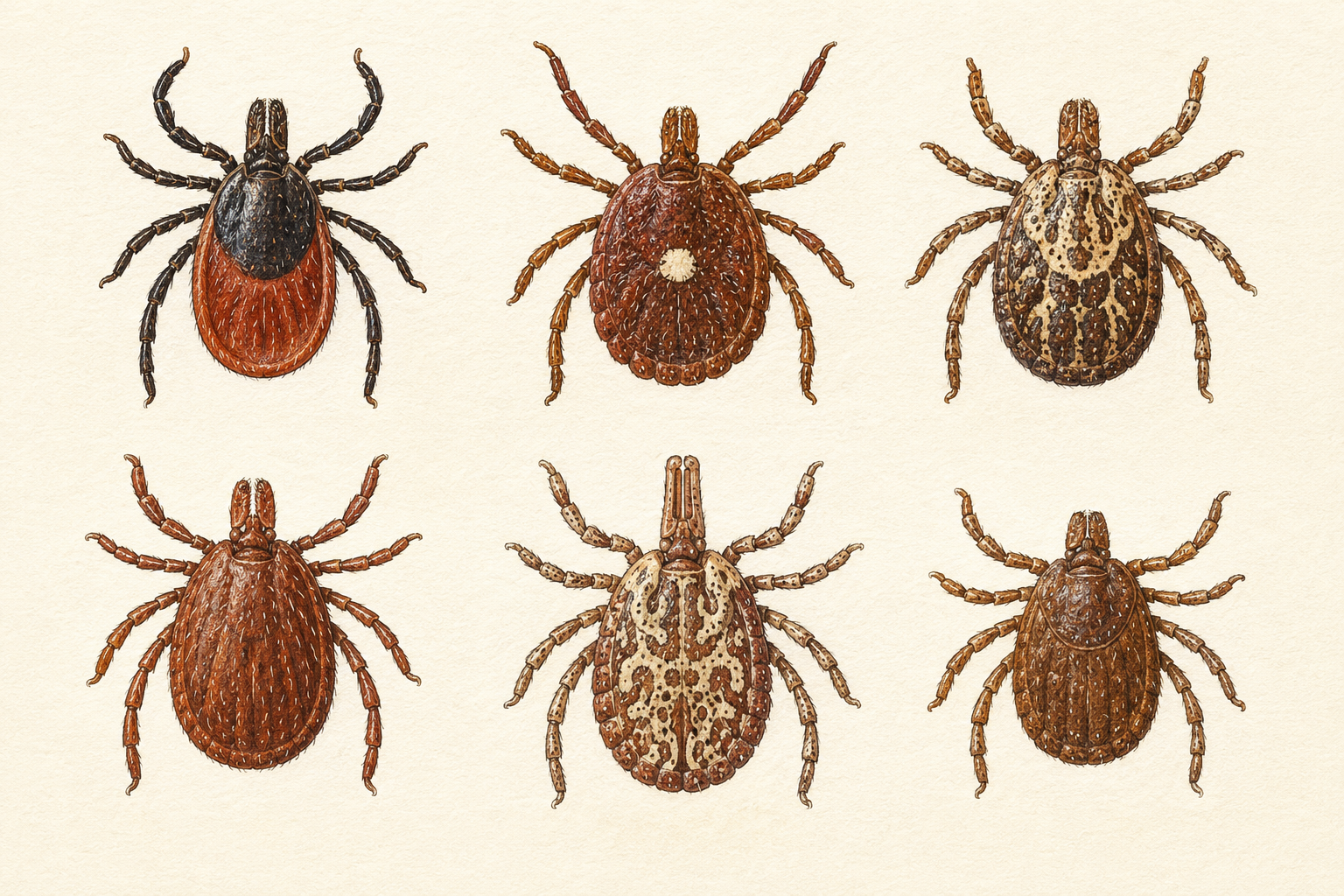
- A bite from an infected blacklegged tick (Ixodes species). Dogs do not ordinarily transmit Lyme disease directly to people or other pets.
- Living in or traveling through wooded, brushy or tick-endemic areas increases exposure, but infected ticks and positive canine tests have been documented beyond the traditional Northeast hot spots.
- A previous infection or positive test does not guarantee lasting protection. Reinfection can occur after another infected tick bite.
An infectious illness depends on both the organism and the animal's ability to resist it. Exposure does not always produce the same severity of illness in every animal. Age, previous immunity, nutrition, stress, and concurrent disease can influence the outcome. The infection may also cause complications that need treatment separately from the organism itself. For example, correcting fluid loss or supporting breathing can be essential even when a targeted medicine has already been started.
What might an owner notice?
- Fever, low energy, reduced appetite and generalized soreness.
- Limping that may improve and then affect a different leg, joint swelling or reluctance to move.
- Rarely, kidney injury may cause vomiting, weight loss, increased thirst or urination, reduced urine production, swelling of the limbs or abdomen, and profound weakness.
- Many antibody-positive dogs have no symptoms at all.
Producing larger volumes of urine is different from trying repeatedly to pass a few drops. The first pattern can reflect changes in water balance or metabolism; the second can reflect pain or obstruction in the lower urinary tract. Owners can help by describing the amount passed on each attempt and any straining, blood, or discomfort. An animal can make repeated attempts without emptying the bladder safely. Suspected inability to urinate requires urgent assessment rather than waiting for a sample.
How is the problem investigated?
History of tick exposure and travel, a physical and orthopedic examination, and assessment for other causes of fever or lameness. A screening antibody test can document exposure. Because antibodies may remain after past infection, a positive result does not by itself prove active clinical disease. Additional or quantitative antibody testing may help interpret exposure, depending on the test already performed and the clinical question. Complete blood count, chemistry panel and urinalysis—often including a urine protein-to-creatinine ratio—to look for kidney involvement and other disease. Testing for other tick-borne infections may be appropriate because coinfections and look-alike illnesses occur.
Blood-cell testing and a chemistry profile provide complementary information. Cell counts can help assess anemia, inflammation, and platelets; chemistry measurements help assess organs and internal balance. Results are interpreted against the species, examination, hydration, medication history, and previous values. A value just outside the reference interval is not automatically the cause of illness. Trends can be more useful than one result, particularly when the aim is to monitor a chronic problem or check that treatment remains safe.
What might treatment involve?
Dogs with illness consistent with Lyme disease are commonly treated with a veterinarian-prescribed antibiotic, often doxycycline for about four weeks. The exact drug, duration and monitoring depend on the patient. Veterinarian-selected pain control and activity guidance may be used for uncomfortable joints. Lyme-associated kidney disease requires urgent, intensive treatment and may need hospitalization or internal-medicine consultation. An otherwise healthy dog with only a positive antibody test is not automatically treated. Veterinarians commonly evaluate urine protein and individual risk before deciding between treatment and monitoring.
Parasite control depends on the organism, its life cycle, and the host species. A medicine effective against one parasite may not cover another, and a product safe for one species may be dangerous for a different animal. Testing may be needed before treatment and again when assessing response or ongoing exposure. Environmental stages and untreated contacts can contribute to reinfection. The plan therefore may combine a specific medicine with cleaning, husbandry, and prevention instead of relying on a single dose.
A movement problem can involve pain, instability, weakness, or more than one of these. Relieving pain is important, but restoring comfortable function may also require changes in activity, body condition, footing, or the home environment. The suitable level of exercise depends on the diagnosis; complete inactivity and unrestricted activity can both be inappropriate in particular situations. Ask for practical instructions about movement and handling, along with the medication plan. Rechecks assess function as well as the outward appearance of the affected area.
This is an overview, not a prescription or a recommendation for a specific individual animal.
What can owners do at home?
Give every prescribed dose exactly as directed and complete the plan unless the veterinary team changes it. Track appetite, energy, limping, water intake, urination and vomiting; report recurrence or lack of improvement. Use a veterinarian-recommended tick preventive consistently and inspect the entire body after outdoor activity, including ears, face, neck, armpits, groin and between toes. Remove attached ticks promptly with fine-tipped tweezers or a tick-removal tool, grasping close to the skin without crushing or coating the tick.
Avoid actions that could make care less safe.
- Do not start leftover antibiotics after finding a tick or after seeing a positive screening result.
- Do not give ibuprofen, naproxen, acetaminophen or other human pain medicine unless a veterinarian specifically directs it.
- Do not assume vaccination replaces tick prevention, daily checks or prompt tick removal.
- Do not assume the home address defines risk; travel, hiking, hunting, boarding and relocation all matter.
What can the longer-term outlook involve?
Most dogs with uncomplicated Lyme-associated joint disease improve with appropriate veterinary treatment. Exposure can persist or recur, so prevention and follow-up remain important. Dogs with suspected Lyme-associated kidney disease have a guarded prognosis and need rapid, intensive care.
A recheck is not simply a repeat of the first appointment. It assesses whether the original problem is improving, whether complications are appearing, and whether the treatment remains appropriate. The useful measures may include comfort, function, intake, body weight, examination findings, or selected tests. Ask which changes are expected before the visit and which should trigger an earlier call. Improvement in one sign does not always mean that every part of the disease has resolved.
Can risk be reduced?
Use reliable tick prevention year-round or for the full locally recommended season; product choice must match the animal's species, age, weight and health. Check for ticks after outdoor exposure and maintain yards to reduce brush, leaf litter and wildlife-associated tick habitat where practical. Discuss canine Lyme vaccination when a dog lives in or travels to an endemic or emerging region. Vaccination is risk-based and complements tick control rather than replacing it. Include travel and previous positive tests when reviewing preventive care with the veterinary team.
When should you arrange care?
- Arrange veterinary care for fever, new or shifting limping, painful or swollen joints, unusual fatigue or appetite loss.
- Discuss any positive Lyme test with the veterinarian who knows the dog, including whether urine protein screening or follow-up monitoring is appropriate.
- Call if symptoms fail to improve as expected, recur after treatment or appear after travel to a tick-endemic area.
Seek urgent veterinary advice if you notice:
DO NOT DELAY URGENT CARE- Repeated vomiting, inability to keep water down, collapse or profound weakness.
- Markedly increased or decreased urination, swollen limbs or abdomen, pale gums or breathing difficulty.
- Severe pain, inability to stand or walk, or rapidly worsening illness.
What information helps the care team?
Write down when changes started, what makes them better or worse, actual food and water intake, and all medicines and supplements. Short videos and a medication-label photo can help describe changes that may not appear during the appointment.
How should you understand the tests?
Ask what each proposed test is intended to answer. Some tests identify a cause; others assess severity, organ function or treatment safety. Results are interpreted with the examination and history. A normal result does not exclude every problem, and an abnormal result does not always explain every sign.
Questions to ask before leaving
- What is confirmed, and which other explanations are still being considered?
- What changes should we expect with the proposed plan, and when should we reassess if they do not occur?
- Which observations should I record, and which changes mean I should call sooner?
- What medicine or home-care problems should I report, and what are the instructions for a missed dose or suspected side effect?
- When is the recheck, what will it assess, and whom should I contact after hours?
A care plan may be adjusted as results or the response become clearer. Keep the written instructions and tell the team if cost, handling or administration difficulty makes the plan hard to follow.
Sources behind this guide
Companion Animal Parasite Council: Lyme disease guidanceVeterinary, university or animal-health guidance ↗American Veterinary Medical Association: Lyme disease in dogsVeterinary, university or animal-health guidance ↗Cornell University: Lyme disease in dogsVeterinary, university or animal-health guidance ↗ACVIM consensus update on Lyme borreliosis in dogs and catsVeterinary, university or animal-health guidance ↗Content last reviewed: September 24, 2026. Review status: veterinary-informed; independent veterinarian review not yet completed.