
REPTILES · OWNER EDUCATION
Cryptosporidiosis in Reptiles
Reptile cryptosporidiosis is infection by microscopic parasites affecting the stomach or intestine. It can cause chronic illness and is important in collection biosecurity.
THE SHORT VERSION
What matters for your animal?
Start with the warning signs and when-to-contact sections if your animal is unwell. The same outward change can have several causes, so this guide helps you prepare questions rather than identify a diagnosis on your own.
What is this condition?
Reptile cryptosporidiosis is infection by microscopic parasites affecting the stomach or intestine. It can cause chronic illness and is important in collection biosecurity.
Cryptosporidiosis in reptiles requires interpretation for the particular host and organism. Repeated regurgitation or weight loss can have other causes, and a single sample may not resolve the question. A specialist can guide testing and containment. The enclosure and contact-animal history matter because persistent infection may have implications for the collection even while the affected reptile receives supportive care.
Digestive signs describe what the animal is doing, rather than a single disease. The problem may be in the digestive tract itself or may reflect pain, metabolic illness, toxins, or another body-wide condition. Fluid loss and reduced food intake can become important complications even before the exact cause is confirmed. The investigation considers the timeline, diet, access to foreign material, stool output, and other signs. This helps distinguish a problem that may respond to medical support from one that needs urgent intervention.
Which species does this guide cover?
The species listed above are the focus of this guide, rather than a complete list of every animal that can develop this condition. Causes, testing and treatment may differ between species and individual patients.
Why can it happen?
- Exposure occurs through contaminated material. Parasite species differ; a result can sometimes reflect organisms from prey rather than disease in the reptile.
What might an owner notice?
- Repeated regurgitation in snakes, diarrhea in lizards, poor growth, weight loss or a swollen stomach region.
How is the problem investigated?
A reptile veterinarian selects repeated stool, molecular or tissue testing and interprets parasite identity with clinical findings.
A fecal examination tests the submitted sample rather than every part of the digestive tract. The method chosen affects which organisms or clues can be detected, and shedding can vary over time. A negative sample therefore does not rule out every parasite or explain every digestive sign. Freshness, storage, and contamination matter. Ask how to collect the sample and whether microscopy, antigen testing, molecular testing, or repeat sampling is appropriate for the particular question.
Molecular testing, such as PCR, looks for genetic material from a target organism in the submitted sample. It can be useful, but the meaning depends on the sample site, timing, and disease. Detecting material is not always the same as proving that the organism explains every sign, while a negative result may not exclude infection if sampling or timing was unsuitable. The veterinarian interprets the result alongside the examination and other findings rather than treating it as an isolated verdict.
What might treatment involve?
Management is difficult and no reliably curative plan applies to all cases. Support, isolation and humane long-term decisions may be needed.
Parasite control depends on the organism, its life cycle, and the host species. A medicine effective against one parasite may not cover another, and a product safe for one species may be dangerous for a different animal. Testing may be needed before treatment and again when assessing response or ongoing exposure. Environmental stages and untreated contacts can contribute to reinfection. The plan therefore may combine a specific medicine with cleaning, husbandry, and prevention instead of relying on a single dose.
This is an overview, not a prescription or a recommendation for a specific individual animal.
What can owners do at home?
Use separate equipment and follow a specific disinfection plan. Track weight and regurgitation without repeatedly offering unsuitable meals.
For animals whose health depends strongly on enclosure conditions, describe measured conditions rather than saying the enclosure is warm or humid. Record temperatures at the places the animal actually uses, the lighting equipment and its age, and the moisture and ventilation setup. A product label does not confirm the exposure the animal receives. Environmental correction can be part of treatment, but it does not replace assessment of infection, injury, dehydration, or organ disease that has already developed.
Avoid actions that could make care less safe.
- Do not assume a negative single stool test excludes infection or treat with generic dewormer.
What can the longer-term outlook involve?
Persistent infection and wasting can give a guarded outlook. Some exposed animals remain without obvious signs.
A recheck is not simply a repeat of the first appointment. It assesses whether the original problem is improving, whether complications are appearing, and whether the treatment remains appropriate. The useful measures may include comfort, function, intake, body weight, examination findings, or selected tests. Ask which changes are expected before the visit and which should trigger an earlier call. Improvement in one sign does not always mean that every part of the disease has resolved.
Can risk be reduced?
Quarantine, appropriate testing and careful sourcing of animals and prey reduce risk.
Disease prevention includes the route by which animals, people, equipment, bedding, feed, or water can carry a problem between groups. Separation works best when it also includes dedicated tools, careful handling order, and an appropriate cleaning plan. A newly arrived animal may appear well while a disease is incubating. Ask which tests or observation period suit the species and suspected disease before mixing groups. Cleaning, disinfection, and disposal requirements differ between organisms, so a single household product is not a universal solution.
When should you arrange care?
- Repeated regurgitation or weight loss needs prompt evaluation; profound weakness or dehydration is urgent.
Seek urgent veterinary advice if you notice:
DO NOT DELAY URGENT CARE- Seek urgent assessment for severe weakness, repeated regurgitation or dehydration.
What information helps the care team?
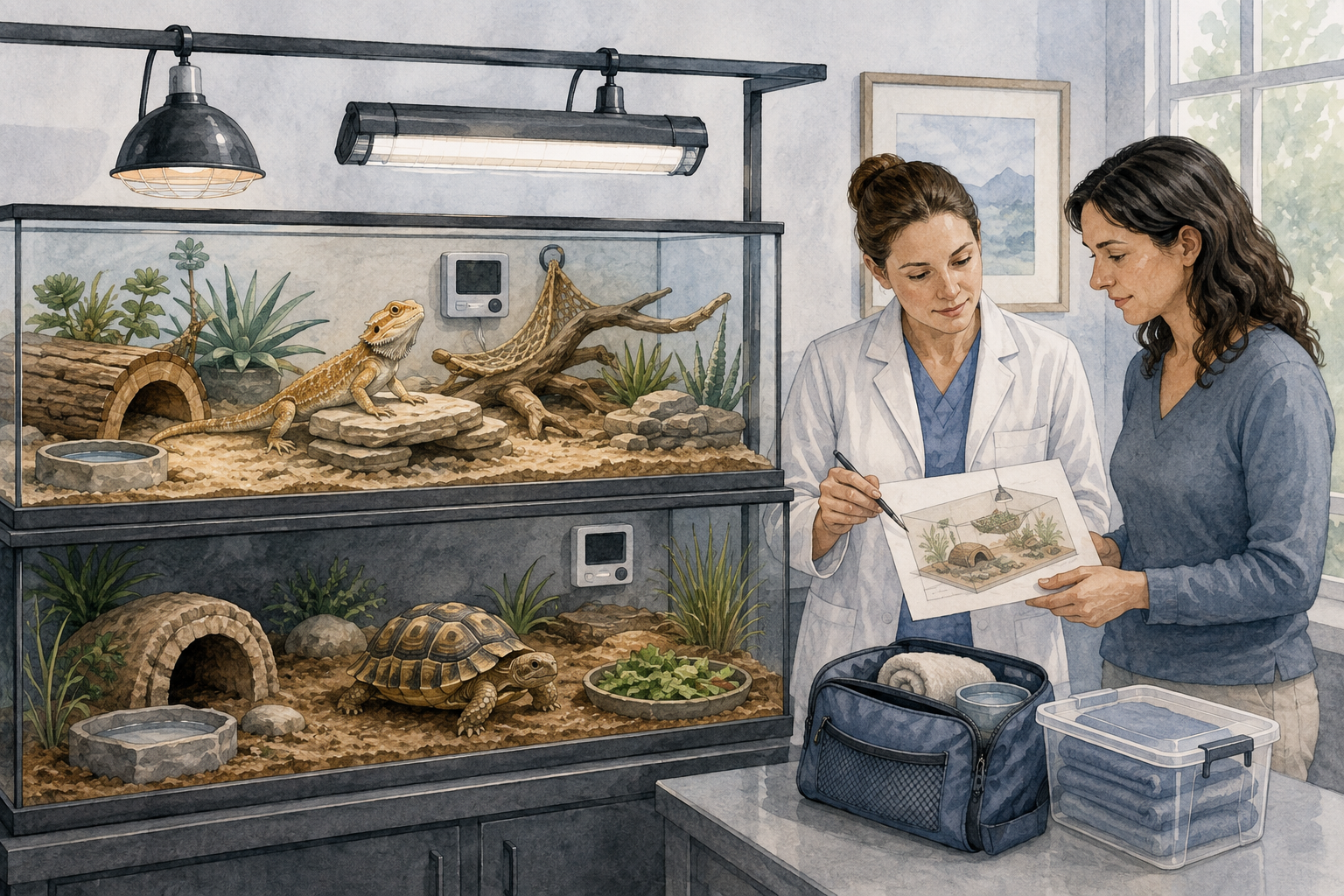
Record actual food intake, weight changes, droppings, enclosure conditions and recent introductions. A photograph of the enclosure and the exact diet and supplement labels can help reveal factors that are difficult to see during the appointment.
How should you understand the tests?
Ask what each proposed test is intended to answer. Some tests identify a cause; others assess severity, organ function or treatment safety. Results are interpreted with the examination and history. A normal result does not exclude every problem, and an abnormal result does not always explain every sign.
Questions to ask before leaving
- What is confirmed, and which other explanations are still being considered?
- What changes should we expect with the proposed plan, and when should we reassess if they do not occur?
- Which observations should I record, and which changes mean I should call sooner?
- What medicine or home-care problems should I report, and what are the instructions for a missed dose or suspected side effect?
- When is the recheck, what will it assess, and whom should I contact after hours?
A care plan may be adjusted as results or the response become clearer. Keep the written instructions and tell the team if cost, handling or administration difficulty makes the plan hard to follow.
Sources behind this guide
Parasitic Diseases of Reptiles - Exotic and Laboratory Animals - Merck Veterinary ManualVeterinary, university or animal-health guidance ↗Content last reviewed: October 3, 2026. Review status: veterinary-informed; independent veterinarian review not yet completed.