
REPTILES · OWNER EDUCATION
Gout in Reptiles
Gout is deposition of urate crystals in reptile tissues or joints. It can result from inadequate elimination of uric acid and may indicate significant kidney disease.
THE SHORT VERSION
What matters for your animal?
Start with the warning signs and when-to-contact sections if your animal is unwell. The same outward change can have several causes, so this guide helps you prepare questions rather than identify a diagnosis on your own.
What is this condition?
Gout is deposition of urate crystals in reptile tissues or joints. It can result from inadequate elimination of uric acid and may indicate significant kidney disease.
Urate deposits can affect a reptile's joints or internal tissues. The veterinarian considers hydration, kidney function, nutrition, and other possible contributors rather than assuming one dietary cause. A diagnosis and its extent may require more than the visible swelling. Treatment goals include comfort and addressing correctable factors; supplements or aggressive home hydration should not replace an individualized assessment.
The kidneys do more than remove waste. They help regulate water, salts, and other aspects of the body's internal balance. When kidney function changes, thirst, urine output, appetite, and overall strength may change as well. A blood result and a urine result answer different questions: waste concentrations provide one view, while urine concentration and other urine findings provide another. A diagnosis therefore depends on the pattern of results and the animal's condition, rather than one number in isolation.
Which species does this guide cover?
The species listed above are the focus of this guide, rather than a complete list of every animal that can develop this condition. Causes, testing and treatment may differ between species and individual patients.
Why can it happen?
- Dehydration, kidney injury, inappropriate feeding and other health problems can contribute. Causes differ between reptile species.
What might an owner notice?
- Swollen painful joints, reduced movement, poor appetite or lethargy. Internal-organ deposits may produce few specific signs.
How is the problem investigated?
Examination, blood testing, imaging and sometimes sampling assess deposits and kidney health.
Imaging provides information about location, size, shape, and structural changes. Radiographs and ultrasound often answer different questions, so one does not simply replace the other. Images may reveal a complication or guide sampling without establishing the exact microscopic cause. Some procedures require sedation or anesthesia to obtain accurate images safely. Ask what the proposed study is expected to clarify and how its possible results would influence treatment, further testing, or referral.
What might treatment involve?
Care addresses hydration, pain, diet and the underlying cause. Treatment cannot always reverse established kidney damage.
A movement problem can involve pain, instability, weakness, or more than one of these. Relieving pain is important, but restoring comfortable function may also require changes in activity, body condition, footing, or the home environment. The suitable level of exercise depends on the diagnosis; complete inactivity and unrestricted activity can both be inappropriate in particular situations. Ask for practical instructions about movement and handling, along with the medication plan. Rechecks assess function as well as the outward appearance of the affected area.
Fluid treatment is tailored to the cause of fluid loss, circulation, electrolytes, and organ function. Drinking some water does not prove that an animal has corrected a significant deficit. Conversely, giving more fluid is not always safer, especially when certain heart or kidney problems are present. The team may need to monitor body weight, urine output, breathing, and blood values while providing support. Home fluid administration should only follow a specific veterinary plan with practical instruction and a reassessment schedule.
This is an overview, not a prescription or a recommendation for a specific individual animal.
What can owners do at home?
Follow a species-specific water and feeding plan; track movement, appetite and weight.
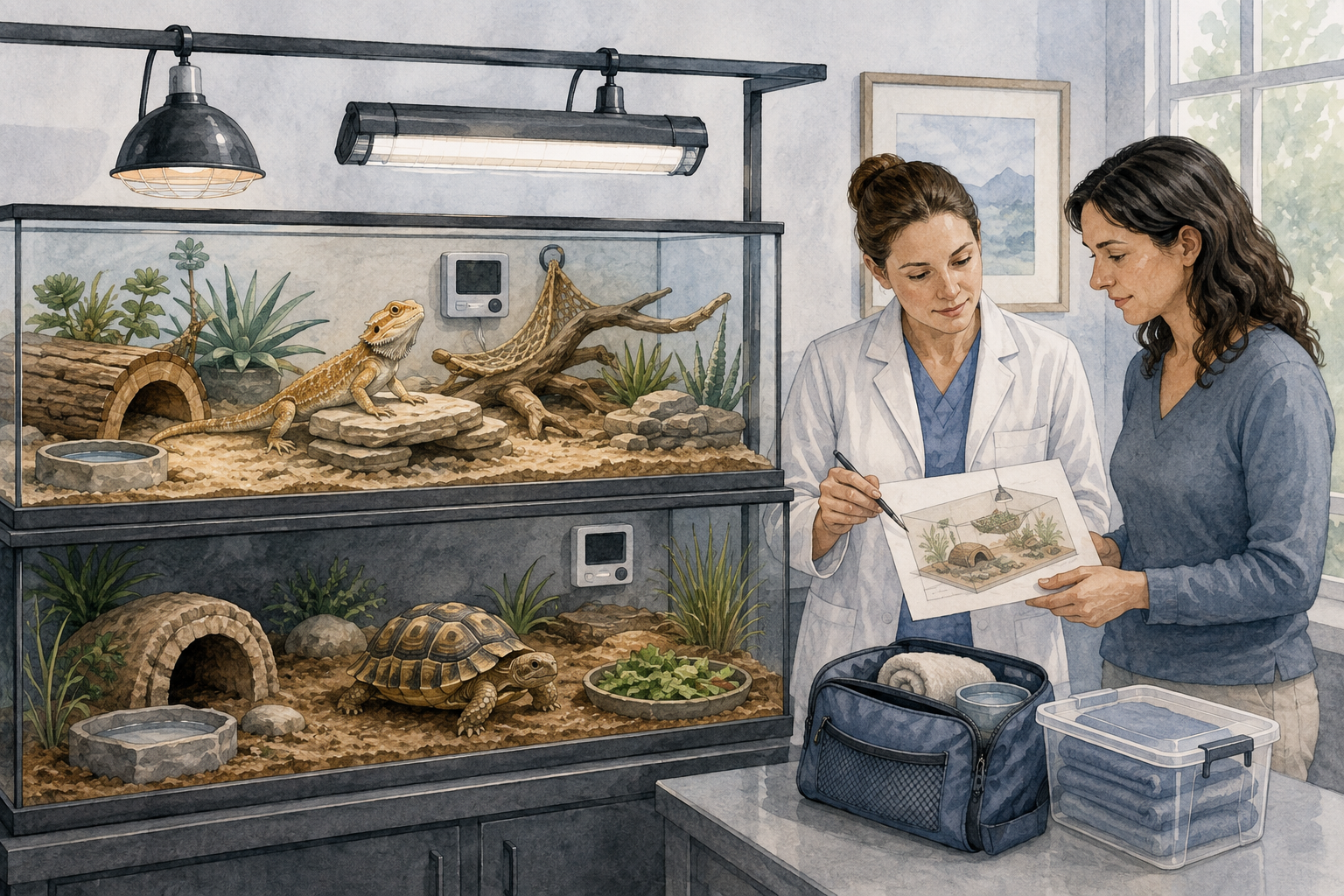
For animals whose health depends strongly on enclosure conditions, describe measured conditions rather than saying the enclosure is warm or humid. Record temperatures at the places the animal actually uses, the lighting equipment and its age, and the moisture and ventilation setup. A product label does not confirm the exposure the animal receives. Environmental correction can be part of treatment, but it does not replace assessment of infection, injury, dehydration, or organ disease that has already developed.
A feeding plan should account for the actual food eaten, not just the amount offered. Selective eating, dropped food, hidden leftovers, and competition can make intake difficult to judge. Record the food type, measured portion, treats, and any supplements so the team can assess the complete diet. A disease-specific diet or assisted feeding may be recommended in some cases, but force-feeding is not a safe default for an animal that cannot swallow normally or may have an obstruction.
Avoid actions that could make care less safe.
- Do not use human gout medication or assume every reptile needs a low-protein diet.
What can the longer-term outlook involve?
Early reversible problems may respond; extensive organ deposits have a more guarded outlook.
A recheck is not simply a repeat of the first appointment. It assesses whether the original problem is improving, whether complications are appearing, and whether the treatment remains appropriate. The useful measures may include comfort, function, intake, body weight, examination findings, or selected tests. Ask which changes are expected before the visit and which should trigger an earlier call. Improvement in one sign does not always mean that every part of the disease has resolved.
Can risk be reduced?
Appropriate feeding, hydration and enclosure temperatures support kidney function.
When should you arrange care?
- Joint swelling or reduced intake needs prompt care; marked weakness or inability to move normally is urgent.
Seek urgent veterinary advice if you notice:
DO NOT DELAY URGENT CARE- Seek urgent care for severe weakness or inability to move normally.
What information helps the care team?
Record actual food intake, weight changes, droppings, enclosure conditions and recent introductions. A photograph of the enclosure and the exact diet and supplement labels can help reveal factors that are difficult to see during the appointment.
How should you understand the tests?
Ask what each proposed test is intended to answer. Some tests identify a cause; others assess severity, organ function or treatment safety. Results are interpreted with the examination and history. A normal result does not exclude every problem, and an abnormal result does not always explain every sign.
Questions to ask before leaving
- What is confirmed, and which other explanations are still being considered?
- What changes should we expect with the proposed plan, and when should we reassess if they do not occur?
- Which observations should I record, and which changes mean I should call sooner?
- What medicine or home-care problems should I report, and what are the instructions for a missed dose or suspected side effect?
- When is the recheck, what will it assess, and whom should I contact after hours?
A care plan may be adjusted as results or the response become clearer. Keep the written instructions and tell the team if cost, handling or administration difficulty makes the plan hard to follow.
Sources behind this guide
Reptiles: Gout | VCA Animal HospitalsVeterinary, university or animal-health guidance ↗Content last reviewed: October 3, 2026. Review status: veterinary-informed; independent veterinarian review not yet completed.