
REPTILES · OWNER EDUCATION
Thermal Burns in Reptiles
Thermal burns occur when a reptile contacts an overheated surface or receives excessive radiant heat. Skin injury can be deeper than it initially appears and may worsen over time.
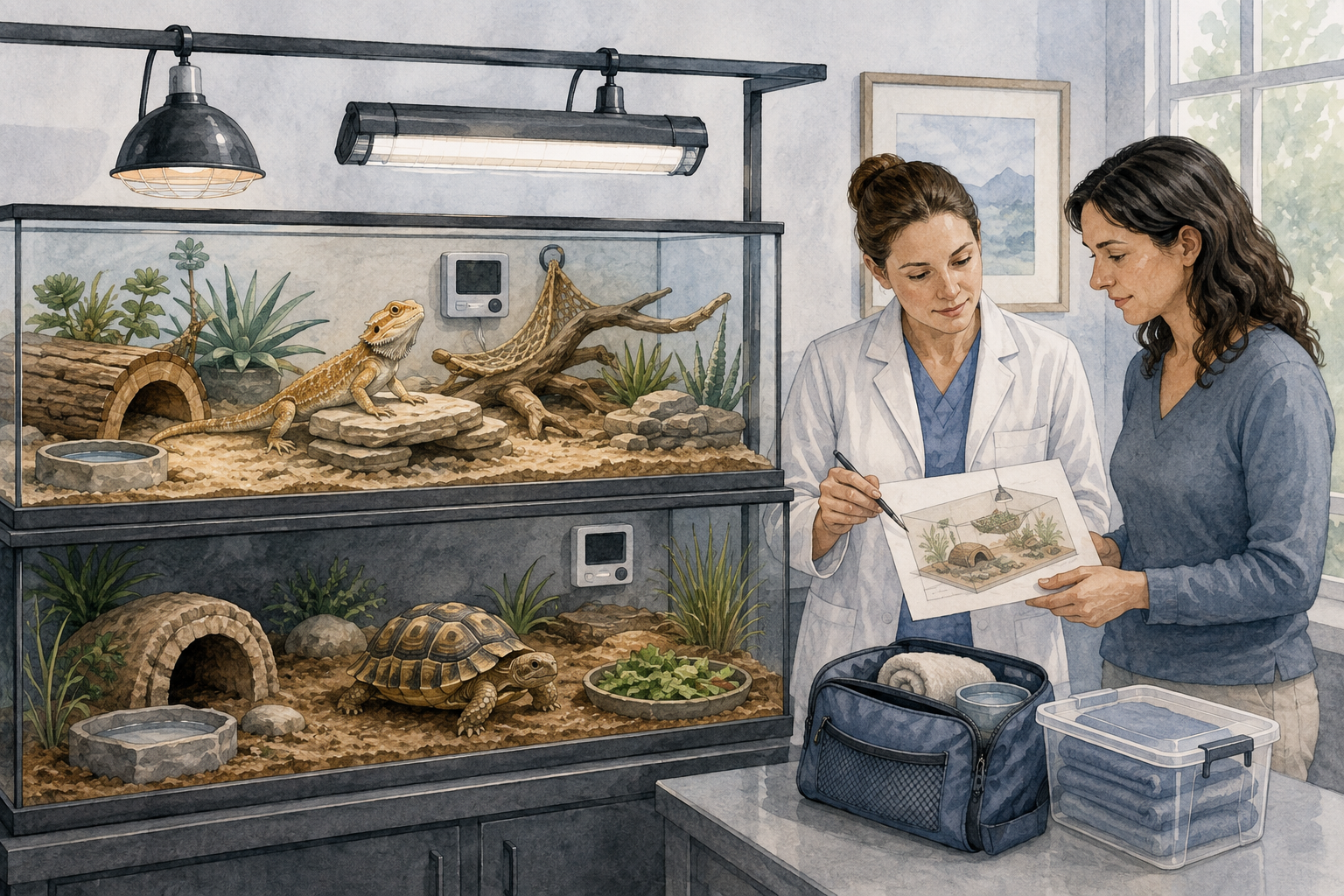
THE SHORT VERSION
What matters for your animal?
Start with the warning signs and when-to-contact sections if your animal is unwell. The same outward change can have several causes, so this guide helps you prepare questions rather than identify a diagnosis on your own.
What is this condition?
Thermal burns occur when a reptile contacts an overheated surface or receives excessive radiant heat. Skin injury can be deeper than it initially appears and may worsen over time.
A reptile can sustain a burn from equipment that appears to provide normal heat. The injury may involve deeper tissue than the first visible mark suggests. Care includes assessment of the wound and correction of the source, using measured temperatures and safe equipment control. Avoid repeated application of household creams or disinfectants because they can irritate tissue and complicate veterinary evaluation.
Which species does this guide cover?
The species listed above are the focus of this guide, rather than a complete list of every animal that can develop this condition. Causes, testing and treatment may differ between species and individual patients.
Why can it happen?
- Uncontrolled heat sources, direct contact with hot lamps or mats, and inaccurate temperature measurement are common hazards.
What might an owner notice?
- Discolored scales, blisters, raw skin, unusual inactivity or delayed skin shedding at the injured area.
How is the problem investigated?
The veterinarian assesses depth, body area affected, hydration and possible infection. Repeat evaluation may be needed as damage becomes clearer.
Similar-looking skin changes can arise from parasites, infection, allergy, injury, or another underlying problem. Sampling the affected area can help separate those possibilities. Depending on the lesion, the veterinarian may examine cells, take scrapings, culture organisms, or obtain tissue for a pathologist. The purpose is to identify what is driving the damage, not just describe the redness or hair loss. Previous creams, cleaners, and medications are worth reporting because they can change the appearance and sometimes the usefulness of samples.
What might treatment involve?
Pain relief, wound management and sometimes removal of dead tissue or surgery are required. Enclosure hazards must be corrected.
Damaged skin or other protective surfaces can become painful and vulnerable to contamination. Treatment considers the depth of injury, affected tissue, infection, and any reason healing may be impaired. Surface cleaning alone may not address deeper damage. The veterinarian may need to remove unhealthy material, provide pain control, protect the site, or investigate an underlying disease. Report new odor, discharge, swelling, darkening, or reduced use of the affected area, and follow the prescribed dressing or protection instructions exactly.
This is an overview, not a prescription or a recommendation for a specific individual animal.
What can owners do at home?
Follow dressing and cleaning instructions and maintain safe measured temperature gradients.
Comfort is assessed through behavior and function as well as obvious crying or vocalization. Changes in posture, movement, grooming, sleep, social interaction, or willingness to be handled can be useful clues. Compare the animal with its own normal behavior rather than with another animal. Keep a short record of what it can do comfortably and share changes with the care team. If pain control appears inadequate, contact the veterinarian; increasing a dose or combining medicines without advice can introduce serious risks.
For animals whose health depends strongly on enclosure conditions, describe measured conditions rather than saying the enclosure is warm or humid. Record temperatures at the places the animal actually uses, the lighting equipment and its age, and the moisture and ventilation setup. A product label does not confirm the exposure the animal receives. Environmental correction can be part of treatment, but it does not replace assessment of infection, injury, dehydration, or organ disease that has already developed.
Avoid actions that could make care less safe.
- Do not apply oils, pop blisters or use ice directly. Do not remove all heat and chill the animal; arrange a safe heat source.
What can the longer-term outlook involve?
Superficial injuries may heal, while deep burns can be serious and leave scarring.
A recheck is not simply a repeat of the first appointment. It assesses whether the original problem is improving, whether complications are appearing, and whether the treatment remains appropriate. The useful measures may include comfort, function, intake, body weight, examination findings, or selected tests. Ask which changes are expected before the visit and which should trigger an earlier call. Improvement in one sign does not always mean that every part of the disease has resolved.
Can risk be reduced?
Use thermostatically controlled equipment, guarded sources and appropriate surface and air temperature checks.
When should you arrange care?
- Any blistering, open burn or extensive discoloration needs prompt care; major burns or weakness are urgent.
Seek urgent veterinary advice if you notice:
DO NOT DELAY URGENT CARE- Seek urgent care for large, open, or deep burns, or for weakness after heat exposure.
What information helps the care team?
Record actual food intake, weight changes, droppings, enclosure conditions and recent introductions. A photograph of the enclosure and the exact diet and supplement labels can help reveal factors that are difficult to see during the appointment.
How should you understand the tests?
Ask what each proposed test is intended to answer. Some tests identify a cause; others assess severity, organ function or treatment safety. Results are interpreted with the examination and history. A normal result does not exclude every problem, and an abnormal result does not always explain every sign.
Questions to ask before leaving
- What is confirmed, and which other explanations are still being considered?
- What changes should we expect with the proposed plan, and when should we reassess if they do not occur?
- Which observations should I record, and which changes mean I should call sooner?
- What medicine or home-care problems should I report, and what are the instructions for a missed dose or suspected side effect?
- When is the recheck, what will it assess, and whom should I contact after hours?
A care plan may be adjusted as results or the response become clearer. Keep the written instructions and tell the team if cost, handling or administration difficulty makes the plan hard to follow.
Sources behind this guide
Environmental Diseases and Traumatic Injuries of Reptiles - Exotic and Laboratory Animals - Merck Veterinary ManualVeterinary, university or animal-health guidance ↗Content last reviewed: October 3, 2026. Review status: veterinary-informed; independent veterinarian review not yet completed.